Table of Content
Share a link to this question via email, Twitter, or Facebook. Many organizations struggle to manage their vast collection of AWS accounts, but Control Tower can help. This Risk & Repeat podcast episode discusses the current state of OT security, including the convergence with IT environments and... From sprint planning to servant leadership, Scrum Masters help Agile developers, product owners and other team members perform at...
Other things that might trigger this error include spelling mistakes or case sensitivity errors. If the JAVA_HOME variable is set as java_home, JAVAHOME or Java_Home, a Unix, Linux or Ubuntu script will have a hard time finding it. The same thing goes for the value attached to the JAVA_HOME variable. Set the location of the JDK installation as the environment variable Value.
Not the answer you're looking for? Browse other questions tagged javagradle or ask your own question.
Some programs will run Java using the program’s availability through the PATH first, and JAVA_HOME second. If another program has installed a JRE and put that JRE’s \bin directory on the PATH, your JAVA_HOME efforts may all be for naught. The JAVA_HOME and PATH environment variables serve two very different purposes. JAVA_HOME simply points to where Java is installed. If you add something to the PATH variable, it makes it available throughout the entire operating system. Of course, many developers who install Java actually want the runtime universally available, so they set the JAVA_HOME and PATH environment variables at the same time.
If one isn’t, then you better hop to it and get that done. I have tried to add the setting to the user variables and it does not work. Even after I removed \bin , I got error because of ";". I received this error because of my JDK version was older, than the JRE installed on my machine. Upgrading the JDK to the same version as the JRE resolved this problem. You can set the output of this command as JAVA_HOME by copying the path and adding the following line to your ~/.bashrc.
Your Answer
And, it also tells you it’s not pointing to the right place, which is helpful as well. All you need to do to fix this error is edit the JAVA_HOME variable and point it to the correct directory. It is worth noting that while a JDK installation is linked to the JAVA_HOME environment variable, JRE installations are typically linked to the JRE_HOME variable. The manner in which you get JAVA_HOME within batch files and shell scripts follows the exact same syntax used by the echo command. Bookend the variable with percentage signs and use that variable within your code just as you would any other scripted variable. If your JDK installation didn't set JAVA_HOME automatically, you can always open the Windows environment variable editor and set it yourself.

The big distinction between PATH and JAVA_HOME settings is that the former points to the JDK bin directory, while the latter points to the installation directory. First, check the Ubuntu or Windows PATH variable and look to see if any other JRE or JDK directory has been added to it. You might be surprised to find out that IBM or Oracle has at some prior time performed an install without your knowledge.
How to set JAVA_HOME in Windows and echo the result
This is the easiest way to manually set JAVA_HOME in Windows 7, 8 and 10. Open source PaaS is a good option for developers who want control over application hosting and simplified app deployment, but not... Of course, there is never any end to the configurations or settings that can trigger JAVA_HOME errors. If you’ve found any creative solutions not mentioned here, please add your expert insights to the comments.
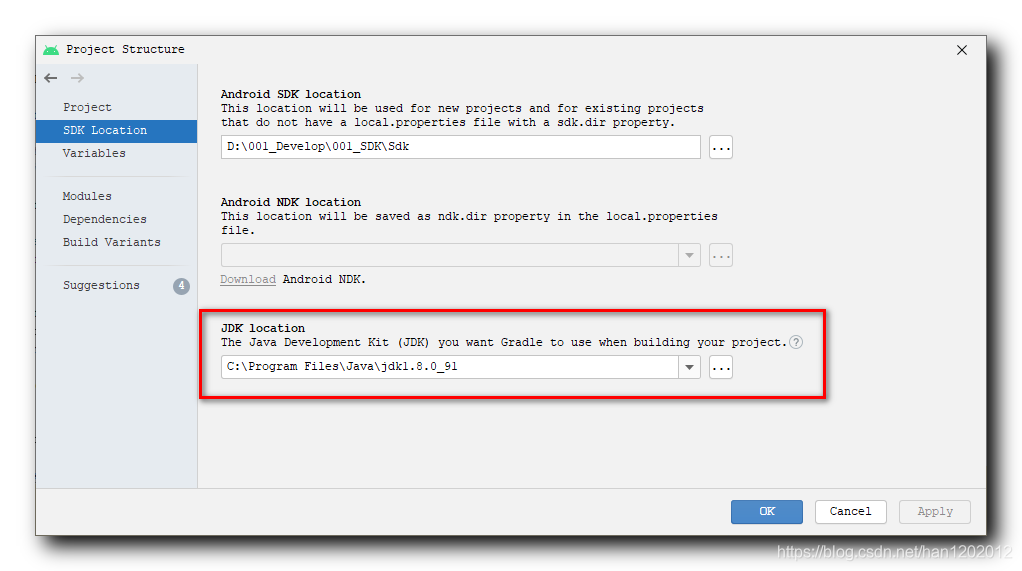
The easiest way to do this is to echo JAVA_HOME in a command prompt or a BASH shell. How to use the JAVA_HOME environment variable editor in Windows 7. Click OK and close the JAVA_HOME environment variable editor. Set JAVA_HOME properly and echo your results with the following tidbits, and also examine how a proper PATH installation can benefit your local environment. Maven says that there is a semi-colon after the directory name in the JAVA_HOME environment variable.
It must point directly at the JDK installation directory itself. If you encounter the JAVA_HOME invalid directory error, make sure the name of the installation folder and the value of the variable match. Please, set the JAVA_HOME variable in your environment to match the location of your Java installation. Please set the JAVA_HOME variable in your environment to match the location of your Java installation.

One very common developer mistake that leads to theJAVA_HOME is set to an invalid directory error is pointing JAVA_HOME to the \bin sub-directory of the JDK installation. That’s the directory you use to configure the Windows PATH, but it is wrong, wrong, wrong when you set JAVA_HOME. If you point JAVA_HOME at the bin directory, you’ll need to fix that. Comment bypinaki[26/Dec/13]I have downloaded and extracted the gradle-1.9 and the java-1.7.
The environment variable for java and gradle has been set too. But unfortunately me too getting the same error message. If needed more information please post it here. Here is how you can accomplish that task with a demonstration of how to set JAVA_HOME in Windows and echo the result to validate that the changes have gone into effect. Also, let's explore how you can add Java to the Windows PATH, which is another configuration parameter that is often set after a JDK installation.
A coding boot camp can jumpstart a career in tech, but only for those willing to go the extra mile. One of the most frustrating JAVA_HOME errors is JAVA_HOME does not point to the JDK. Community driven content discussing all aspects of software development from DevOps to design patterns.
We can either place the symlink back inside the snap or define an absolute path to the JDK directory like @dcap0 did in his PR. There also seem to be some other issues with 13.10 version. Also remove double quotes from start and end of variable.. I've also set my project to the .main version, tried to clean the cache to run setupDecompWorkspace on IntelliJ and I still can't get it right. I also tried to run Eclipse EE, which got no problem.


No comments:
Post a Comment